 FM-1 Case 360
 GitHub
Measurements and verification
Measure your FM-1
Measurements use millimeters. X is zero at the centerline and increases to the right when looking down at the keyboard. Y starts at the front edge and increases toward the ports. Measure Z for rear connectors from the flat underside of the body, excluding the feet.
| Profile field | Measurement |
| --- | --- |
| body_w, body_d, body_h, corner | Maximum body dimensions excluding feet and knobs, plus the corner radius in plan view. |
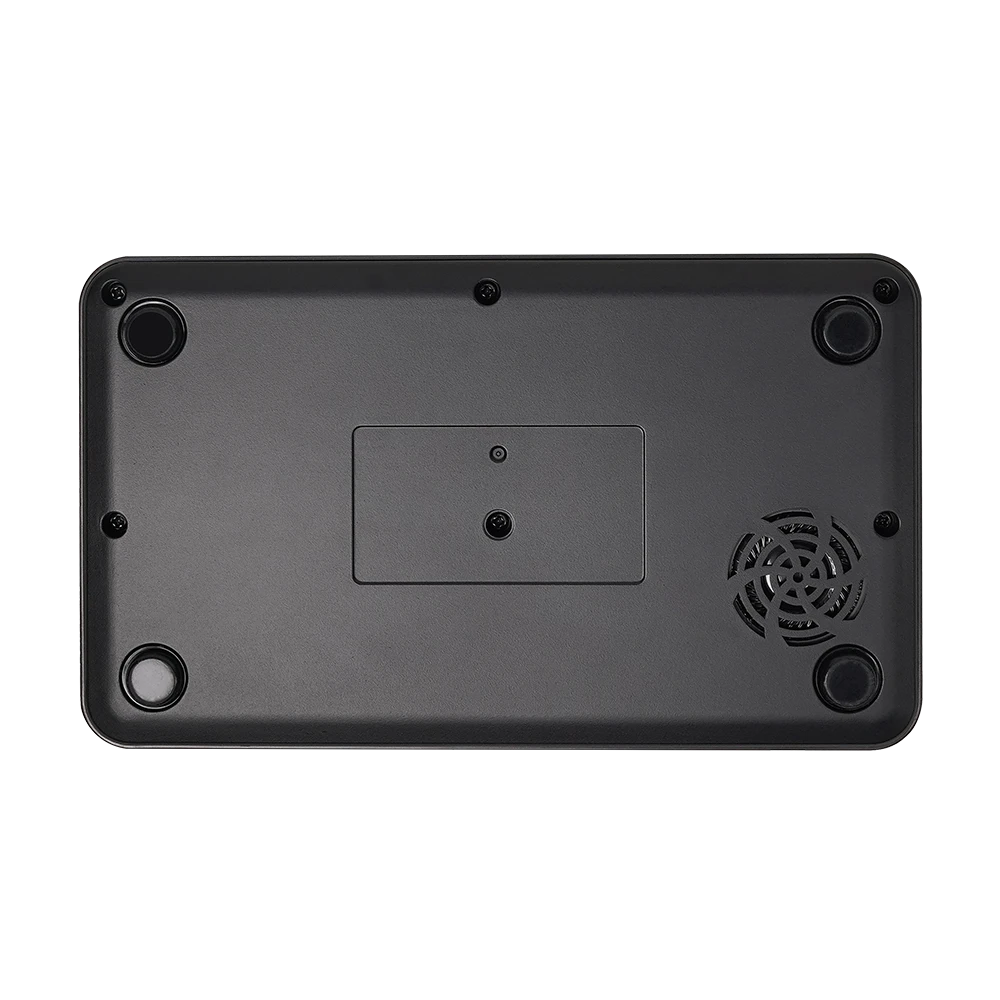
| feet, foot_d, foot_h | Four XY centers, maximum foot diameter and foot height. |
| knobs, knob_d, knob_h | Eight XY axes, outside diameter of stock knobs and height above the body. |
| screen, glass, display | XY center, screen glass dimensions and active display dimensions. |
| keyboard, buttons, key_h, button_h | Keyboard area [X, Y, width, depth], two button areas [X, Y, width, depth, radius], and key and button heights above the body. |
| speaker | XY center and grille diameter. |
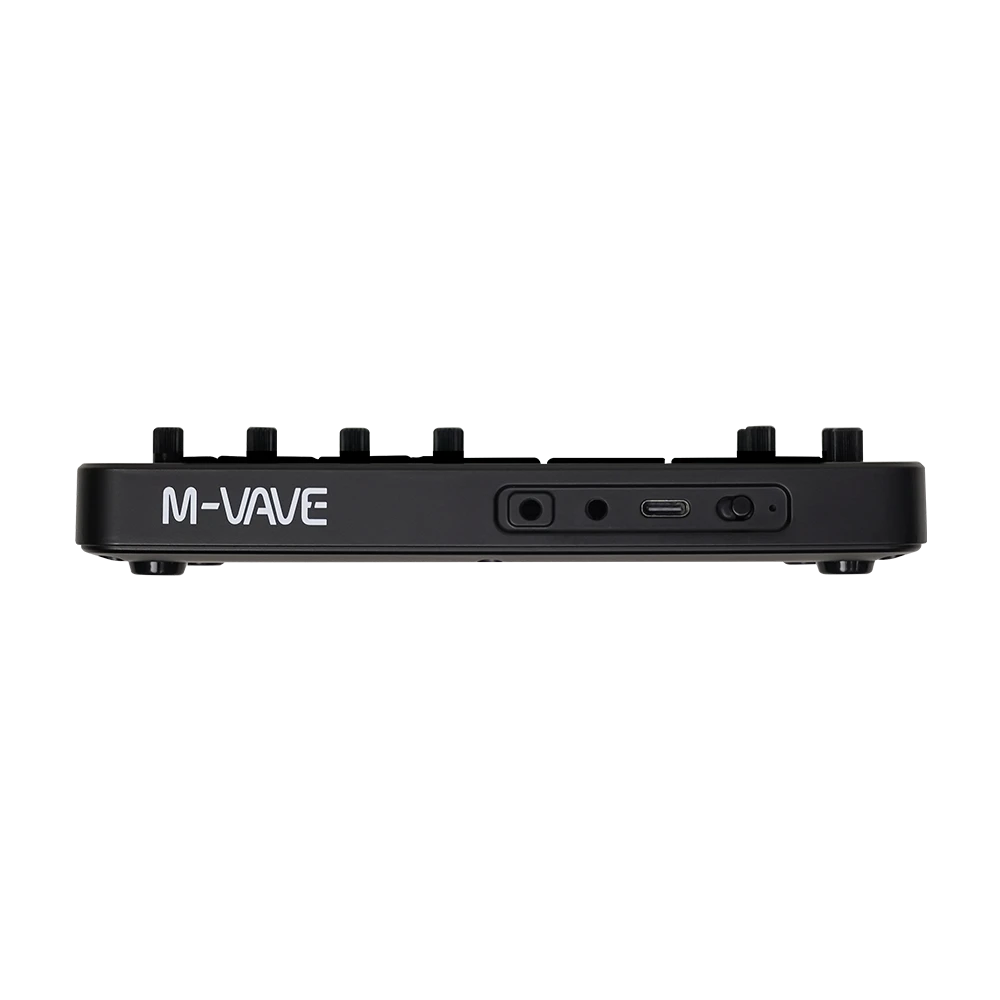
| port_x, port_w, port_bottom, port_plugs | Center, width and bottom edge height of the rear opening. Each plug clearance is [X, Z, width, height] in rear view. Check the overall opening width when changing plugs. |
| split_y | Legacy profile field retained for loading old variants. |
Where the stock dimensions come from
| Dimensions | Basis | | --- | --- | | 161.5 × 96.5 mm body, 28.6 mm overall height, 27 keys and connector types | Manufacturer specifications. | | Eight knob axes, keyboard outline, screen glass and button areas | Perspective-corrected top photo scaled to the nominal body footprint. Knob centers were measured at the base. The Les Audio 1:1 template served as a reference. | | 18.7 mm body height, 7 mm knob height and 2.9 mm foot height | Estimated from the manufacturer’s rear photo and adjusted to the stated overall height. Verify vertical measurements with a caliper. | | 13.6 mm foot diameter and speaker center near X −57.9 mm, Y 34.0 mm | Calibrated underside photo. The rear row of three screws provided a Y reference. The nominal pocket diameter with clearance is 14.3 mm. | | Rear features near X −5.5, −18.2, −31.5 and −45.0 mm, and Z 9.4 mm above the body underside | Estimated from the rear photo after reversing its X axis. Plug widths and finger space at the power switch are clearance allowances. | | 28.1 mm active TFT area, 9.0 mm corner radius and key and button heights | The corner radius comes from a unit photo. The active area and heights are estimates. |
The top and underside photos were rectified independently by extending the body edges to their intersections at the corners. Typical measurement uncertainty is about 0.5–1 mm, depending on shadows, edges and the height of the photographed feature. Photo calibration changed the foot diameter from 11.8 mm to 13.6 mm, moved the foot centers farther apart along X and shifted the speaker 1.4 mm left and 1.0 mm back. It also updated the keyboard, glass and button outlines and the knob axes. Measure the knob cap’s inner diameter, heights, active TFT area and plug cross-sections on your unit.
References include the manufacturer’s specifications and photos, the Les Audio template and the Zande Creates CAD scan listing. M‑VAVE FM‑1, Underside photo, Rear photo, Les Audio 1:1 template, Zande Creates CAD scan.
Verify exports
./.venv/bin/python src/verify.py case.zip checks that STL meshes are closed and
have positive volume and verifies the placement of parts on 3MF plates.
For assembly intersection checks, install the optional manifold3d package
with ./.venv/bin/python -m pip install manifold3d and run
./.venv/bin/python src/verify.py --assembly.
Digital checks covered the nominal perforated and print-in-place designs,
clearance for the four rear features with the lid removed, and shutter
rotation in 15° increments through 180°. Previous --info checks in OrcaSlicer
2.4.2 and Snapmaker Orca 2.4.1 read the four default geometry plates and a
print-in-place accessories plate. Fit, latch behavior, material shrinkage
and acoustic attenuation require physical tests.
Add a UI translation
Copy the pl or zh catalog in web/translations.js under a new BCP 47
language tag, translate the values, and add the same tag to the language
selector in web/index.html. Keep the English message keys. Missing strings
fall back to English. Static labels use data-i18n or data-i18n-label.
Dynamic labels use the same lookup via t(). File and API identifiers stay
stable across languages.